
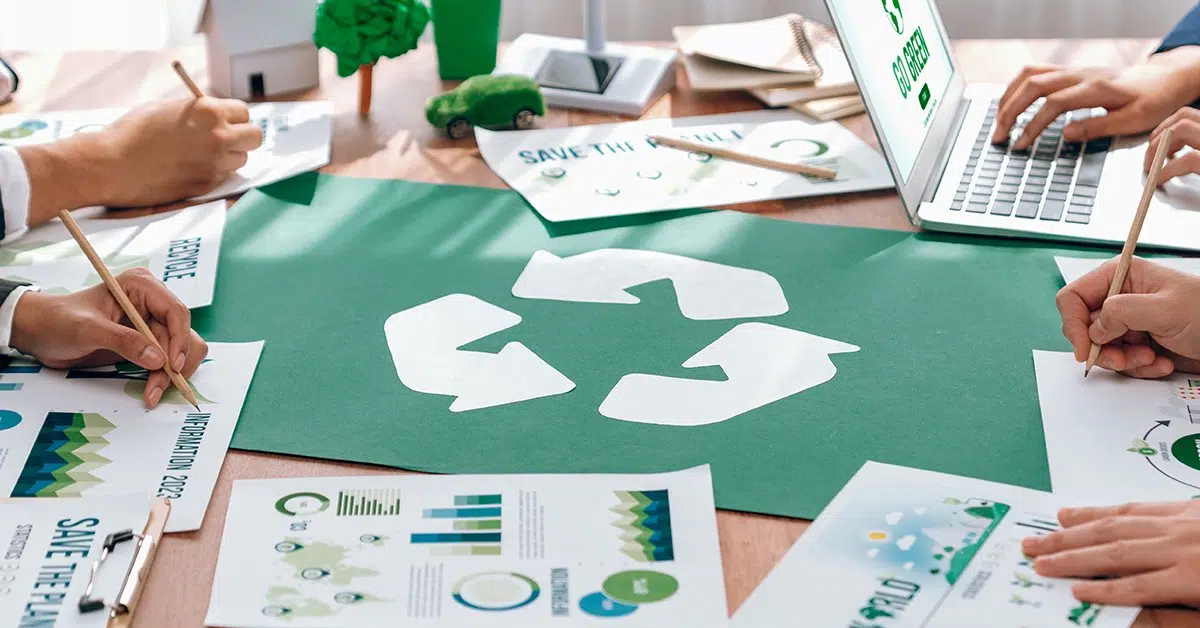
Every morning in cities like Accra, Lagos, Nairobi and Johannesburg, trucks move through traffic carrying what most people see as useless garbage. But behind those piles of plastic bottles, food scraps, old electronics and industrial waste is an industry that investors are beginning to treat very seriously. Across Africa, waste is slowly becoming money.
Not long ago, waste management was mostly seen as a government headache. It was about overflowing gutters, cholera outbreaks, burning dumpsites and sanitation campaigns that usually appeared during rainy seasons. Today, that conversation is changing. Startups, investors and even international climate organizations are now looking at African waste differently. They see billions of dollars sitting in landfills.
Africa produces more than 125 million tonnes of waste every year according to estimates from the African Development Bank and the World Bank. That number is expected to rise sharply because Africa is urbanizing faster than any other region in the world. By 2050, the continent’s population is projected to hit around 2.5 billion people. More people means more consumption. More consumption means more waste.
The problem is that most African countries are still struggling to process what they produce. In many cities, less than 60 percent of waste is properly collected. Huge amounts end up in drains, rivers, beaches and illegal dumping sites. Yet this same failure is exactly why businesses are rushing into the sector. The market gap is massive.
Plastic alone has become a goldmine.
Africa generates millions of tonnes of plastic waste yearly, but only a small percentage gets recycled. Companies are now buying used plastics from waste pickers and turning them into new products like pavement blocks, roofing sheets, school desks, shopping bags and furniture. In Kenya, some companies are producing stronger paving bricks from recycled plastic mixed with sand. In Ghana, young entrepreneurs are collecting sachet water rubbers and converting them into reusable products. In Nigeria, recycling startups are paying households directly for plastic waste through mobile apps and collection systems.
The economics behind it are becoming impossible to ignore. Recycled plastic is now part of a global supply chain. International brands are under pressure to use more recycled materials because of climate regulations and environmental targets. That means African recycling businesses are no longer serving only local markets. Some are exporting processed recycled materials abroad.
Electronic waste is another billion-dollar opportunity hiding in plain sight.
Africa imports huge quantities of second-hand electronics every year. Phones, laptops, televisions, refrigerators and computer parts eventually become waste. The United Nations estimates that global e-waste generation has crossed 60 million tonnes annually, and Africa’s share is growing quickly. Inside discarded electronics are valuable materials like copper, aluminum, gold and lithium. Informal workers in places like Agbogbloshie in Accra have known this for years. What is changing now is the formalization of the industry.
Governments and private companies are beginning to build structured e-waste recycling systems. Investors see value in recovering minerals from old electronics instead of importing raw materials. As demand for batteries and renewable energy technology rises worldwide, electronic waste suddenly looks less like trash and more like an urban mining business.
Then there is organic waste, which many people still underestimate.
Food waste and agricultural waste make up a large percentage of Africa’s total waste. Instead of dumping it in landfills, companies are converting it into compost, animal feed and biogas energy. In countries dealing with unstable electricity and expensive fuel, waste-to-energy projects are attracting serious attention.
Some businesses are turning market waste into cooking gas. Others are producing fertilizers from organic waste to support farmers. This is becoming important because fertilizer prices across Africa have risen sharply in recent years due to global supply chain disruptions and conflicts affecting imports. Organic fertilizer businesses are stepping into that gap.
Climate change is also pushing money into the waste sector.
International climate funds and development finance institutions are investing heavily in projects that reduce emissions. Poor waste disposal releases methane, one of the most dangerous greenhouse gases. Recycling and waste processing projects now qualify for green financing, carbon credit programs and sustainability grants.
This means waste companies are not only earning from collecting rubbish. Some are earning from environmental credits and climate partnerships. Investors who once ignored sanitation businesses are now entering the sector because global climate policies are changing where money flows.
Technology is helping accelerate everything.
Waste collection in many African cities used to rely almost entirely on informal systems. Today, startups are building apps that allow households to schedule pickups, track recycling points and even earn rewards for separating waste. Data is becoming valuable. Companies want to know how much waste cities produce, where it comes from and how it can be processed profitably.
This is creating jobs too. Waste management is no longer only about sweepers and truck drivers. The industry now includes software developers, engineers, environmental scientists, logistics managers, recyclers, designers and sustainability consultants.
One of the most overlooked parts of the industry is the informal sector.
Across Africa, thousands of waste pickers survive by collecting plastics, cans and scrap materials from dumpsites and streets. For years, they were ignored despite doing much of the actual recycling work. But companies are now realizing these workers are an essential part of the value chain. Some startups are organizing waste pickers into structured networks and paying them more consistently. Others are providing protective equipment and digital payment systems.
There is also a growing real estate angle to the waste business.
Landfills are becoming expensive and politically controversial. Cities are running out of dumping space. This pressure is creating opportunities for companies focused on waste reduction, recycling infrastructure and alternative building materials. Some businesses are using recycled waste to produce low-cost construction products at a time when housing demand across Africa is rising rapidly.
Governments are slowly catching up as well.
Countries are introducing bans on single-use plastics, stricter environmental regulations and recycling targets. Rwanda’s plastic ban is often cited as one of the strictest in Africa. Kenya has also taken aggressive steps against plastic bags. These policies are forcing businesses to rethink packaging and waste disposal, creating entirely new markets for biodegradable materials and recycling services.
Still, the industry has major challenges.
Funding remains difficult for many startups. Waste infrastructure is expensive. Collection systems are inconsistent. Public attitudes toward waste separation are still weak in many places. Corruption and poor urban planning continue to affect sanitation projects. In some cities, waste businesses struggle because people are unwilling to pay for proper disposal.
But despite all these problems, investors are staying interested because the numbers are too large to ignore.
The global waste management market is already worth trillions of dollars, and Africa remains one of the least developed but fastest-growing parts of that industry. The continent’s rapid urban growth means the waste problem will keep increasing. For entrepreneurs, that means the opportunity will also keep growing.
What makes this story fascinating is that Africa’s waste economy is being built in real time. Young entrepreneurs are creating businesses from problems cities have complained about for decades. The same overflowing gutters and dumpsites people see as signs of failure are becoming raw materials for a completely new economy.
In many African cities, the next big business opportunity may not be hidden in oil, gold or real estate. It may be sitting in black plastic bags by the roadside waiting for somebody smart enough to monetize it.