
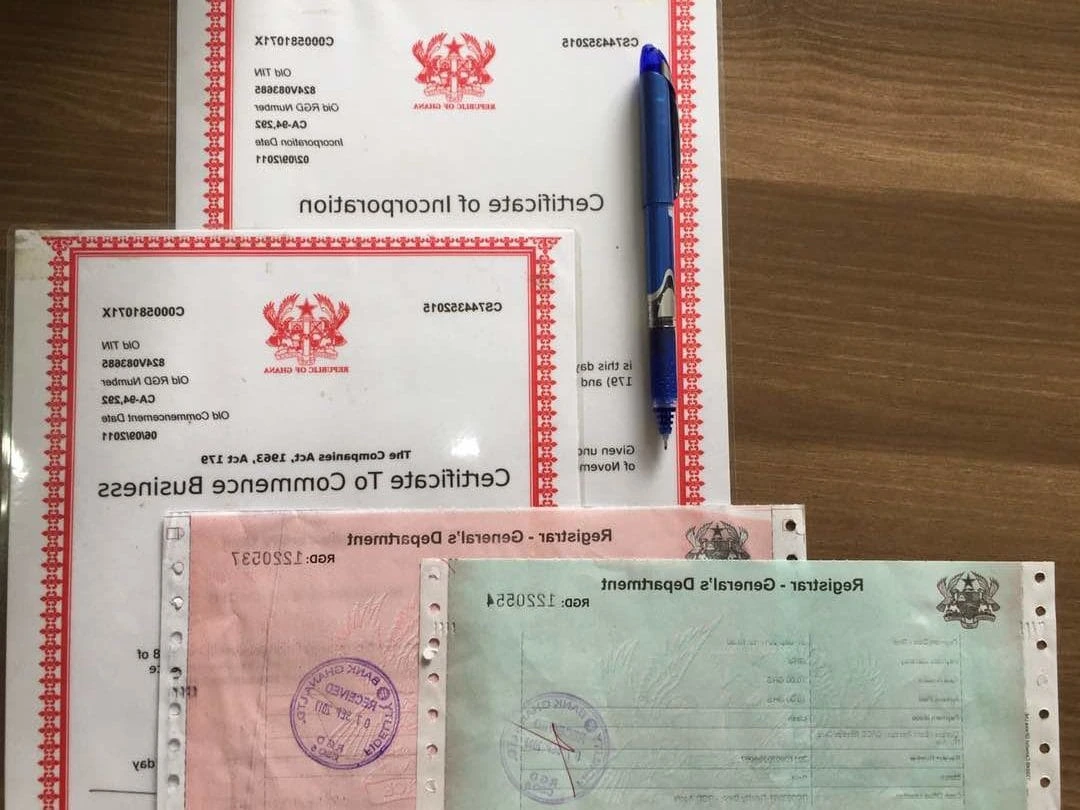
Registering a business in Ghana is an essential step for anyone who wants to operate legally, build credibility, and access financial opportunities. Formal registration allows entrepreneurs to open business bank accounts, apply for loans, bid for contracts, and operate without legal restrictions. The process is supervised by the Registrar-General’s Department, now operating under the Office of the Registrar of Companies. Below is a clear step-by-step guide to registering a business in Ghana.
The first step is to decide on the type of business structure. In Ghana, the common structures include sole proprietorship, partnership, limited liability company, and company limited by guarantee. A sole proprietorship is owned by one person and is the simplest to register. A limited liability company is separate from its owners and is suitable for businesses that plan to grow or attract investors.
The second step is to choose a unique business name. The name must not be identical or too similar to an existing registered business. A name search is conducted to confirm availability. Once approved, the name can be reserved for a limited period while completing the registration process.
The third step involves completing the required registration forms. These forms request details such as the business name, nature of business, office address, contact information, and particulars of directors or owners. For a limited liability company, you will need details of directors, shareholders, and a company secretary.
The fourth step is submitting the required documents. These typically include valid identification such as a Ghana Card or passport, Tax Identification Number, residential and digital addresses, and company regulations for limited liability companies. All directors and shareholders must provide their identification details.
The fifth step is payment of the registration fees. The fees vary depending on the type of business and the stated capital in the case of a limited liability company. After payment and successful processing, a Certificate of Registration or Certificate of Incorporation will be issued.
After receiving the certificate, the next step is to register with the Ghana Revenue Authority for tax purposes. Businesses must obtain a Tax Identification Number if they do not already have one and may need to register for Value Added Tax if their turnover meets the required threshold.
Depending on the nature of the business, additional permits or licenses may be required from local authorities or regulatory bodies. For example, food businesses may require health permits, while certain professions may need sector-specific approval.
In conclusion, registering a business in Ghana involves selecting a business structure, conducting a name search, completing forms, submitting required documents, paying fees, and registering for tax. Although the process may seem detailed, following each step carefully ensures that the business operates legally and positions itself for long-term growth and success.