
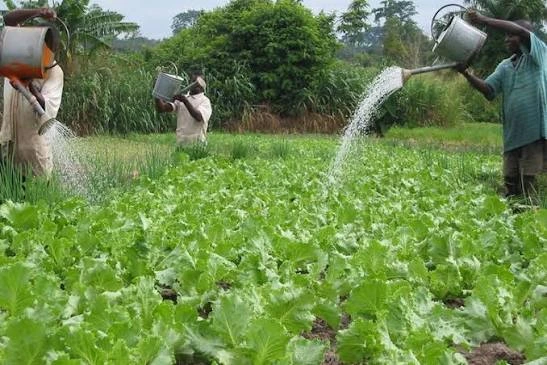
There was a time when market women in Makola could almost predict food prices with accuracy. Tomatoes would become cheaper during harvest season. Yam prices would stabilize after certain rains. Pepper shortages were temporary. Traders understood the rhythm of the weather almost as much as farmers did.
Now, even they are guessing.
In many Ghanaian homes today, people complain about food prices almost casually. A small bowl of tomatoes suddenly costs twice what it did a few months ago. Onion prices swing wildly. Plantain becomes expensive without warning. Rice prices keep rising. People blame traders, transport fares, fuel prices, the dollar, or “hard times.” But hidden underneath all these explanations is another force quietly shaping the cost of food in Ghana: climate change.
And most people do not even notice it.
Climate change in Ghana is often discussed like a future problem. Something about melting ice somewhere far away, rising sea levels, or international conferences filled with politicians and scientists. But for many ordinary Ghanaians, climate change has already arrived — not as a speech or headline, but as more expensive kenkey, costly vegetables, shrinking harvests, and unstable food supply.
The connection is becoming impossible to ignore.
Over the last decade, Ghana’s weather patterns have become increasingly unpredictable. Farmers who once relied on consistent rainy seasons now struggle to know when to plant. In parts of northern Ghana, rains sometimes arrive late, stop abruptly, or become too intense within short periods. Some farming communities now experience longer dry spells followed by destructive floods that wash away crops in days.
According to data from Ghana’s Ministry of Food and Agriculture and climate researchers, agriculture in Ghana remains heavily rain-fed, meaning most farmers depend almost entirely on natural rainfall rather than irrigation systems. That makes the sector extremely vulnerable to climate changes. When rainfall patterns fail, food production drops almost immediately.
And once production drops, prices rise.
The effects show up clearly in some of Ghana’s most consumed foods. Tomato production, for example, has become increasingly unstable because tomatoes are highly sensitive to temperature changes and irregular rainfall. During extreme heat, yields reduce drastically. Excess rainfall can also destroy farms through fungal diseases and flooding. This partly explains why tomato prices sometimes rise sharply even during periods when consumers expect them to fall.
Maize production faces similar problems. Maize is one of Ghana’s most important staple crops, used directly in homes and also as feed for poultry. When droughts reduce maize harvests, the impact spreads beyond households. Poultry farmers struggle with expensive feed, chicken prices increase, egg prices rise, and eventually consumers pay more for protein.
Climate change does not just attack crops. It attacks the entire food chain.
Fishermen are dealing with changing ocean temperatures and declining fish stocks along Ghana’s coast. In recent years, many fishing communities have complained about lower catches and longer fishing trips. This affects supply in markets and pushes seafood prices upward. In farming communities, rising temperatures are also increasing pest invasions. Fall armyworms, for instance, have destroyed thousands of hectares of maize farms across West Africa in recent years, worsening food insecurity and increasing farming losses.
Then there is flooding.
When floods hit farming areas, the destruction goes beyond crops. Roads become damaged, transportation slows, food spoils before reaching urban markets, and traders increase prices to recover losses. A flooded road in a farming community in the Eastern Region may eventually affect tomato prices in Kumasi or Accra days later. Consumers often only see the final price increase, not the environmental disaster behind it.
One of the most worrying realities is that climate change is making food inflation more unpredictable. In the past, food prices in Ghana followed more recognizable seasonal patterns. Today, sudden shortages can happen almost anytime. One month there is enough pepper. The next month prices triple because a heatwave damaged farms somewhere quietly.
The Bank of Ghana and Ghana Statistical Service have repeatedly shown that food inflation remains one of the biggest drivers of overall inflation in the country. In several recent inflation reports, food inflation consistently stayed higher than non-food inflation. While economic pressures like fuel prices and currency depreciation play major roles, climate-related disruptions are increasingly becoming part of the equation.
But here is what makes the issue more dangerous: many people still separate climate change from economics.
They see environmental discussions as completely different from conversations about daily survival. Yet the two are now deeply connected. A farmer dealing with drought earns less income. A trader pays more for scarce produce. A family buys less food. A restaurant increases meal prices. A worker demands higher wages because living costs are rising. Eventually the entire economy feels the pressure.
Climate change is no longer just an environmental issue. It is a kitchen-table issue.
And Ghana is particularly vulnerable because agriculture employs a large portion of the population directly or indirectly. The sector contributes significantly to livelihoods, especially in rural communities. When climate shocks hit agriculture, the consequences spread quickly through employment, household income, nutrition, and national inflation.
Some crops are already becoming harder and more expensive to grow in certain regions. Cocoa farmers, for example, are facing increasing threats from irregular rainfall, heat stress, and diseases worsened by changing weather conditions. Ghana, one of the world’s largest cocoa producers, could face serious production pressures if climate trends continue worsening. That does not only affect export revenue. It affects thousands of livelihoods tied to the cocoa economy.
Meanwhile, smallholder farmers — who produce most of Ghana’s food — often lack access to irrigation systems, crop insurance, storage facilities, modern farming technologies, or climate-resistant seeds. Many are essentially fighting a modern climate crisis with very little protection.
Some farmers are adapting in creative ways. Others are simply struggling to survive.
Across parts of northern Ghana, some farmers now plant earlier or switch crop varieties because traditional planting calendars no longer work reliably. In some communities, farmers have started diversifying crops to reduce risk. Others depend increasingly on boreholes and small irrigation systems where possible. But adaptation costs money, and many small farmers cannot afford large-scale adjustments.
The irony is painful. The people contributing the least to global carbon emissions are often suffering the most from climate consequences.
For urban consumers, climate change may still feel invisible. Air conditioners still work. Supermarkets remain stocked. Restaurants continue operating. But the warning signs are already appearing in ordinary places — the woman reducing tomatoes in stew because prices are too high, the chop bar increasing prices again, the parent buying fewer groceries than before.
These are not isolated economic inconveniences anymore. They are signals of a changing climate reshaping food systems quietly but aggressively.
And the problem could worsen.
Climate experts continue warning that West Africa may experience more extreme weather events, rising temperatures, prolonged droughts, and stronger flooding patterns in coming years. If Ghana does not invest heavily in climate-resilient agriculture, irrigation infrastructure, storage systems, and sustainable farming methods, food prices may become even more unstable.
The frightening part is not only that food is becoming expensive.
It is that the reasons behind the rising prices are becoming harder to control.
A country can attempt to stabilize fuel prices. Governments can introduce subsidies. Monetary policies can target inflation. But controlling rainfall, droughts, floods, and heatwaves is far more complicated.
So the next time somebody complains about expensive tomatoes in the market, climate change may not be the first thing that comes to mind.
But somewhere between a failed rainy season, flooded farmland, dried-up crops, damaged roads, heat-stressed livestock, and unstable harvests, the climate has already entered the conversation — whether people notice it or not.n