
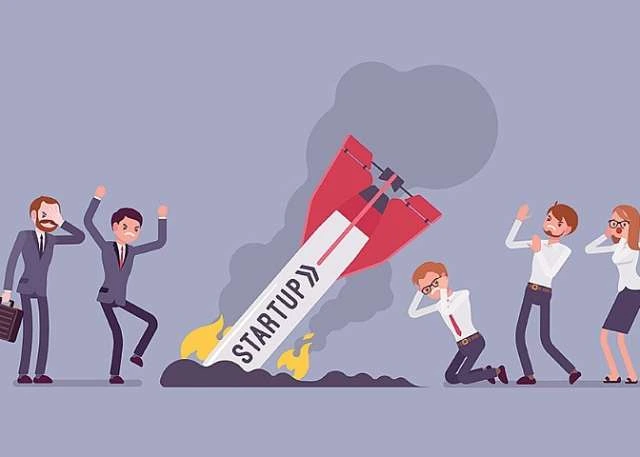
Not long ago, a Ghanaian founder pitched his startup to a group of foreign investors during a virtual fundraising session. The product was solid. The market problem was real. The team was passionate. Yet the meeting ended with the same response many Ghanaian entrepreneurs have heard before: “Interesting business, but we’re not investing at this stage.”
The founder wasn’t alone. Across Ghana, startups are emerging in sectors ranging from fintech and agritech to logistics, health technology and e-commerce. Innovation hubs are growing, young entrepreneurs are launching companies at unprecedented rates, and technology is becoming more accessible than ever. Yet when international venture capital firms announce their African investments, Ghana is often missing from the headlines.
The question is not whether Ghana has talented entrepreneurs. It does. The question is why so few Ghanaian startups succeed in attracting the foreign investment needed to scale.
One reason is visibility.
When international investors think about Africa’s startup ecosystem, four countries dominate the conversation: Nigeria, Kenya, South Africa and Egypt. These markets consistently attract the majority of venture capital flowing into Africa. According to multiple African startup funding reports, these four countries often account for more than 80 percent of startup funding raised on the continent in a typical year.
For many foreign investors, Ghana is simply not the first place they look.
This is not necessarily because Ghana lacks opportunities. Rather, investors tend to follow ecosystems that already have a track record of producing successful exits and high-growth companies. Nigeria has produced billion-dollar startups. Kenya has become synonymous with mobile money innovation. South Africa offers a mature financial market. Egypt provides access to a large consumer base.
Ghana, despite its stability and growing entrepreneurial culture, has yet to produce enough globally recognized startup success stories to attract the same level of attention.
Size also matters.
Most venture capital investors are looking for businesses that can scale rapidly and generate substantial returns. Ghana’s population of roughly 35 million is attractive but relatively small compared to Nigeria’s more than 230 million people. Investors often ask whether a startup can expand beyond Ghana quickly enough to justify investment.
Many Ghanaian startups build solutions specifically for local challenges. While this creates value domestically, investors frequently want evidence that the product can succeed across multiple African markets or even globally. A startup solving a problem in Accra may impress investors, but they also want to know whether the same solution can work in Lagos, Nairobi or Johannesburg.
Another challenge is the lack of investment readiness.
Many startups are built around strong ideas but weak business structures. Entrepreneurs may have impressive products yet struggle to provide financial statements, customer acquisition data, market projections or clear growth strategies.
International investors are not investing in ideas alone. They are investing in evidence.
A founder who cannot demonstrate revenue growth, customer retention rates, profit margins or market traction will find it difficult to convince investors to commit capital, regardless of how innovative the product may be.
This problem is particularly common among early-stage startups where founders focus heavily on product development while paying little attention to governance, accounting and documentation.
Investors often describe these factors as boring. Yet they are exactly what determine whether money changes hands.
Economic uncertainty presents another obstacle.
Over the past few years, Ghana has faced significant economic challenges, including high inflation, currency depreciation and debt restructuring efforts. While these issues affect the broader economy, they also shape investor perceptions.
A foreign investor bringing dollars into Ghana must consider what happens when the cedi loses value. Revenue that appears impressive in local currency may look far less attractive when converted into dollars.
Currency volatility increases risk, and investors generally avoid markets where risks appear difficult to predict.
Then there is the issue of exits.
Venture capital firms make money when they eventually sell their stake in a company. This can happen through acquisitions, mergers or stock market listings. In more mature startup ecosystems, there are clearer pathways for investors to exit and realize profits.
In Ghana, successful exits remain relatively rare.
Without a proven history of startup acquisitions or large-scale public listings, investors may hesitate because they are uncertain about how they will eventually recover and multiply their investment.
Networking is another overlooked factor.
Many startup investments happen through relationships rather than cold emails. Founders who attend international conferences, accelerator programmes and industry events often gain access to investors long before formal fundraising begins.
Unfortunately, many Ghanaian startups remain disconnected from global investment networks. Some lack the resources to participate in international ecosystems, while others simply underestimate the importance of relationship-building.
The result is that potentially investable businesses remain invisible to the people who have capital to deploy.
Talent retention also plays a role.
The rise of remote work has created opportunities for skilled Ghanaian software developers, engineers and technology professionals to work for foreign companies without leaving the country. While this is beneficial for individuals, startups often struggle to compete with international salaries.
A startup cannot scale effectively if it constantly loses key talent. Investors notice this. They pay close attention to whether a company can attract and retain the people necessary for growth.
Ironically, Ghana possesses several advantages that investors generally appreciate. The country enjoys political stability, relatively strong democratic institutions and a reputation for peaceful transitions of power. Compared with many emerging markets, Ghana offers a predictable business environment.
Yet these strengths alone are not enough.
Investors want scalable business models, strong financial management, measurable growth, regional expansion plans and founders who understand how venture capital works. Stability may get Ghana onto an investor’s watchlist, but execution is what secures funding.
The reality is that Ghana’s startup challenge is not a shortage of ideas. Every year, entrepreneurs launch innovative businesses capable of solving real problems. The bigger challenge is transforming those ideas into companies that meet international investment standards.
Until more startups can demonstrate scale, strong governance, regional ambition and consistent growth, international investors will continue looking elsewhere.
But there is another way to view the situation.
The fact that Ghana remains relatively underfunded may actually represent an opportunity. Investors are constantly searching for the next overlooked market. If Ghana can produce more high-growth startups, strengthen its support ecosystem and build stronger links to global capital networks, the country could become one of Africa’s most attractive investment destinations.
The talent is already here. The ideas are already here. The question is whether the ecosystem can bridge the gap between innovation and investment before the rest of the world notices what it has been missing.