
The National School Feeding Secretariat has directed caterers operating under the School Feeding Programme in the Upper East Region to prepare meals for school children without the use of spices, encouraging them instead to rely on natural ingredients such as onions, garlic, and ginger.
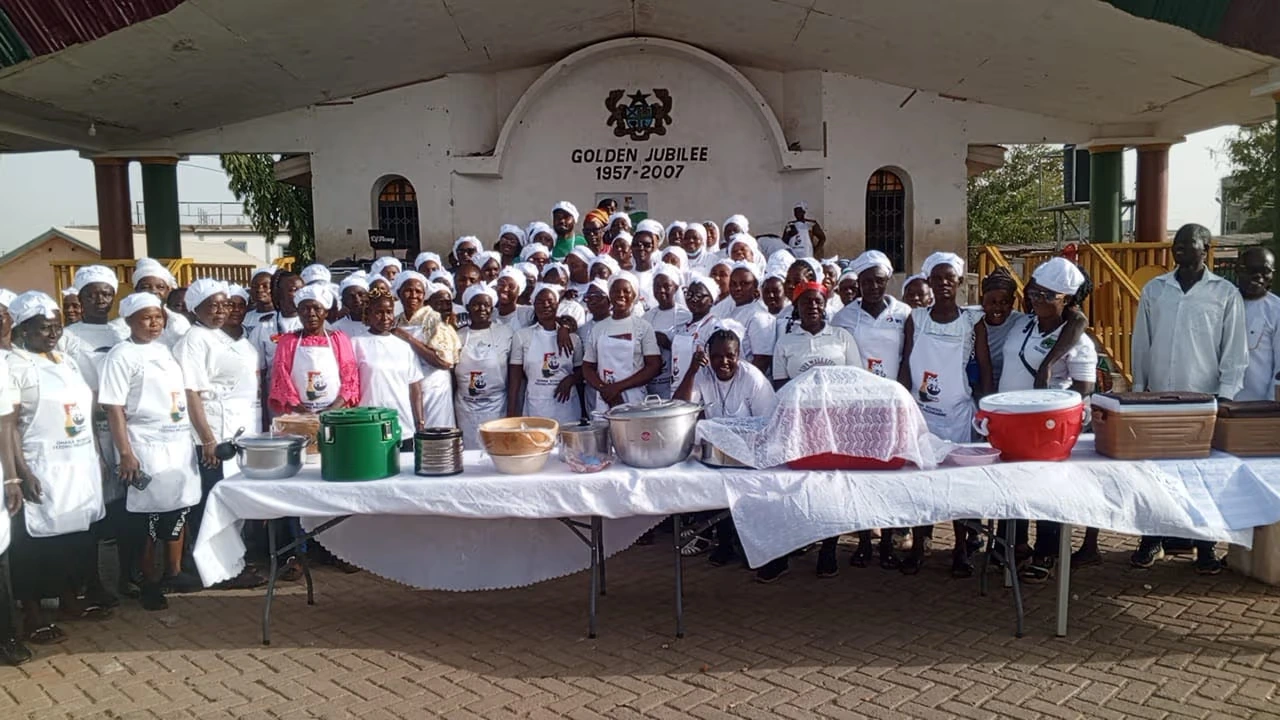
The directive came to light during a practical training and sensitization programme held for caterers in the central zone of the Upper East Region, covering the Bolgatanga Municipal, Bolgatanga East, Bongo, Talensi, and Nabdam districts. The training focused on food nutrition and hygiene practices. The region currently has 1,365 caterers serving 1,007 schools.
Participants were educated on the nutritional value of meals served to school children and the benefits of incorporating traditional foods and local ingredients to support the healthy development and academic performance of pupils.
The Nutrition Officer at the National School Feeding Secretariat, Amina, who facilitated the training, explained the rationale behind the spice-free directive.
“They (Caterers) are all mature, they know how to cook. We are not here to teach them how to cook. We are here to add some little bits of education to them. We don’t want them to be cooking with spices for the kids. It’s not good for their system. All we want them to do is natural produce food. Like, for example, like onions, garlic and ginger. They shouldn’t use any spices, and no Maggi, nothing. It’s just the ginger and the onions. We used to prepare the food without these spices and it is delicious,” she said.
She further stressed that “the children are still growing up and we want them to look healthy all the time. So, adding those spices will damage their system.”

Madam Amina also disclosed that the training introduced caterers to new food options, particularly soybeans. “We introduced new things, food they have not done before especially, Soybeans. Soybeans contain a lot of protein, and we have shown them how to do it, how to process it and they have done it perfectly. For personal hygiene, when we went for their orientation, we orientated them how personal hygiene is being done. And here too, we did the same thing with them,” she said.
The Upper East Regional Coordinator for the School Feeding Programme, Fawzia Abangnamah Yakubu, underscored the importance of the training in ensuring that meals prepared for pupils are both nutritious and safe.
“Basically, the rationale is to ensure that the dishes our caterers are giving them is healthy. Hygiene is part of the training, because if you observe, there are some foodstuff that basically, if you don’t handle it very well, or you are not hygiene conscious, you will prepare food and at the end of the day, you will transfer a disease to the child that is consuming the food,” Madam Fawzia emphasised.
Upper East Regional Minister Donatus Akamugri Atanga praised the Secretariat for the initiative, expressing confidence that it would enhance the quality of meals in schools and ultimately contribute to improved academic performance among pupils.
The caterers, who are predominantly women, expressed enthusiasm about the training, noting that as mothers themselves, the welfare of the children remains their foremost concern. They pledged to apply the knowledge gained, including personal hygiene practices, in their daily cooking.
The practical training was carried out across all municipalities and districts in the Upper East Region, with the shared objective of delivering quality and healthy meals to pupils under the School Feeding Programme.