
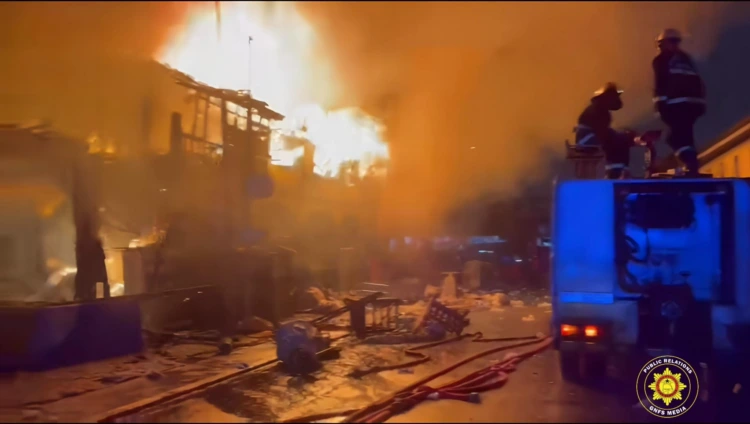
The Ghana National Fire Service (GNFS) has described Wednesday night’s fire outbreak at the Accra Central Police Station in Tudu as one of the most demanding incidents firefighters have encountered in recent times. The Service cited gas explosions, live electrical wires, crowd interference, inadequate firefighting infrastructure, and heavy rainfall as major challenges.
In an interview on Thursday, Assistant Divisional Officer Alex King Nartey said personnel responded swiftly to the emergency but were met with serious operational obstacles.
He explained that the presence of several gas cylinders and deep freezers within the facility significantly intensified the blaze and heightened the risk of explosions.
“When we arrived at the scene, we had to deal with multiple gas explosions. The intensity was high because gas cylinders were stored there, and there were several deep freezers containing gases that can explode under extreme heat,” he said.
Mr Nartey further noted that the situation was worsened by an active electricity supply in the area, which exposed firefighters to danger.
“Our officers experienced electric shocks while attempting to fight the fire because power had not been cut. That made the operation extremely difficult,” he stated.
Crowd control also posed a significant challenge. According to him, firefighters had to collaborate with police officers to manage onlookers while working to access the core of the fire.
“The interference from members of the public made our work more complicated. We had to combine firefighting efforts with crowd control alongside the police,” he added.
He also highlighted the lack of adequate firefighting infrastructure, particularly the shortage of fire hydrants in the vicinity.
“There were no nearby hydrants except one within the police station compound, which limited our access to water,” Mr Nartey revealed.
The heavy downpour that swept through Accra that evening placed additional strain on emergency teams, who were responding to multiple incidents across the city, including other fires and a reported building collapse.
Despite the numerous challenges, the GNFS successfully contained the blaze and prevented it from spreading to nearby structures.
The Service has renewed its call for improved fire safety practices, proper storage of gas cylinders, and enhanced emergency infrastructure, especially the installation and maintenance of functional fire hydrants in high-risk commercial areas.