
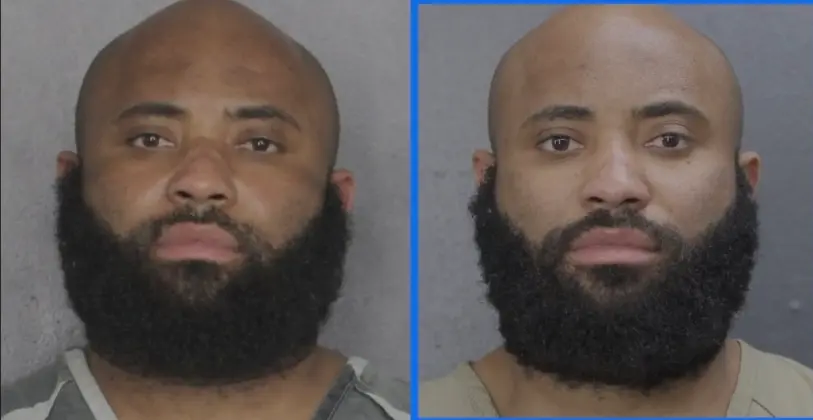
A federal court in Florida has sentenced Ghanaian-American Kelvin Owusu Nkwantabisa to 17 years in prison for masterminding a $38 million Business Email Compromise (BEC) fraud scheme that targeted businesses and individuals across the United States and internationally.
Prosecutors said Nkwantabisa, 33, who operated under the aliases Kevin Brown and KO, led the U.S. arm of a transnational cybercrime network responsible for stealing more than $38 million through sophisticated email fraud operations.
According to court documents, members of the syndicate gained unauthorised access to victims’ email accounts and covertly monitored communications related to ongoing business transactions. They then impersonated trusted partners and redirected payments into bank accounts under their control.
Investigators revealed that the network used multiple bank accounts and shell companies to disguise the source of the stolen funds and avoid detection by law enforcement agencies.
Prosecutors told the court that Nkwantabisa coordinated accomplices overseas, directed the opening of bank accounts across several states, monitored fraudulent transfers and instructed co-conspirators on laundering the proceeds. His leadership role in the scheme resulted in the longest sentence handed down in the case.
Three other members of the network were also sentenced.
Leshea Moore, 29, of Georgia, received more than 11 years in prison after admitting to creating shell companies, opening fraudulent bank accounts and assisting in moving stolen funds.
John Jouissance, 33, of Ohio, was sentenced to four years after pleading guilty to setting up shell companies and bank accounts used to receive illicit proceeds.
Justice Amoh, 37, of New York, who used the alias Samuel Andrews, was sentenced to three years in prison for opening accounts under false identities and processing fraudulent transactions at Nkwantabisa’s direction.
Commenting on the outcome, United States Attorney Jason A. Reding Quiñones said the defendants exploited legitimate business relationships and abused victims’ trust to steal millions of dollars. He noted that the convictions send a strong message to individuals seeking to use the U.S. financial system to facilitate fraud and money laundering.
The investigation was led by Homeland Security Investigations (HSI) Fort Lauderdale, with prosecutors from the U.S. Attorney’s Office for the Southern District of Florida handling the case.
Business Email Compromise schemes remain among the most costly forms of cybercrime globally, resulting in billions of dollars in losses annually. Authorities say the sentencing forms part of broader efforts to dismantle transnational financial and cybercrime networks.