
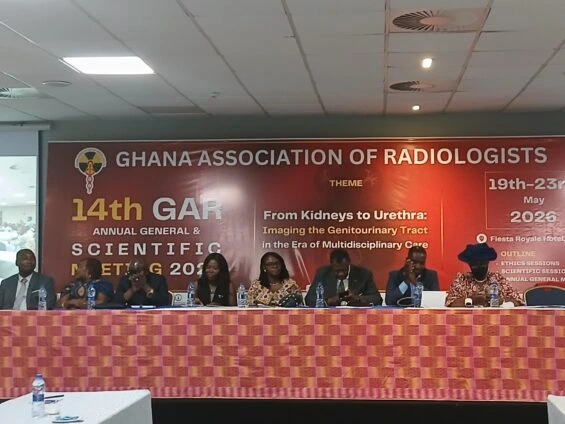
The Ghana Association of Radiologists (GAR) has urged the government and stakeholders in the health sector to invest in modern diagnostic infrastructure nationwide to strengthen healthcare delivery and promote the early detection of diseases.
According to the Association, many health facilities in Ghana still lack access to advanced imaging equipment such as CT scans and Magnetic Resonance Imaging (MRI) machines, making timely diagnosis and treatment difficult for patients.
Speaking at the opening of GAR’s 14th Annual General and Scientific Meeting in Accra, the President of the Association, Dr Francis Ofei, stressed the importance of equipping hospitals across the country with modern imaging technologies.
“We need to retool healthcare facilities across the country with imaging modalities like CT scans and MRI machines to support effective multidisciplinary healthcare delivery,” he stated.
The conference, themed “From Kidneys to Urethra: Imaging the Genitourinary System in the Era of Multidisciplinary Care,” brought together radiologists, nephrologists, urologists, clinicians, and other health professionals to discuss advances in medical imaging and collaborative patient care.
Dr Ofei explained that radiologists play a critical role in disease diagnosis and treatment through imaging technologies such as ultrasound, CT scans, and MRI scans. However, he noted that healthcare delivery in Ghana often operates in silos, with specialists working independently rather than collaboratively.
He advocated a multidisciplinary approach where radiologists, clinicians, nephrologists, and urologists work together to improve patient outcomes.
The GAR President also raised concerns about the increasing prevalence of chronic kidney disease in Ghana, which studies estimate affects between 14 and 16 per cent of adults. He linked part of the rise in kidney-related illnesses to illegal mining activities, commonly known as galamsey, which continue to pollute water bodies with harmful chemicals such as mercury and cyanide.
According to him, prolonged exposure to these toxic substances places excessive strain on the kidneys, eventually leading to kidney failure.
Dr Ofei further attributed late diagnosis of kidney disease to low public awareness and limited access to diagnostic services in some areas. He encouraged regular medical check-ups and advised the public not to ignore unusual symptoms.
President of the Ghana Kidney Association, Dr Charlotte Osafo, also highlighted hypertension, diabetes, excessive use of painkillers, herbal medications, and environmental pollution as major contributors to kidney disease in Ghana.
She warned that kidney disease often develops silently without early symptoms and advised the public to routinely monitor their blood pressure and blood sugar levels to reduce the risk of kidney failure.
Dr Osafo additionally cautioned against the misuse of over-the-counter painkillers and unapproved herbal medicines, noting that they could gradually damage the kidneys.
She encouraged patients diagnosed with kidney disease to adhere to medical advice and comply with imaging tests such as ultrasounds and X-rays, which help doctors assess kidney damage and determine appropriate treatment.
The event also highlighted the need for Ghana-specific imaging protocols and stronger cross-specialty training to improve healthcare outcomes.
Meanwhile, Chairman of the Medical and Dental Council, Professor Agyeman Badu Akosa, called on healthcare professionals to uphold professionalism, accountability, and proper documentation in medical practice.
He expressed concern about the increasing number of malpractice and professional misconduct cases being reported to the Council, warning that all complaints would be thoroughly investigated to ensure accountability within the health sector.