
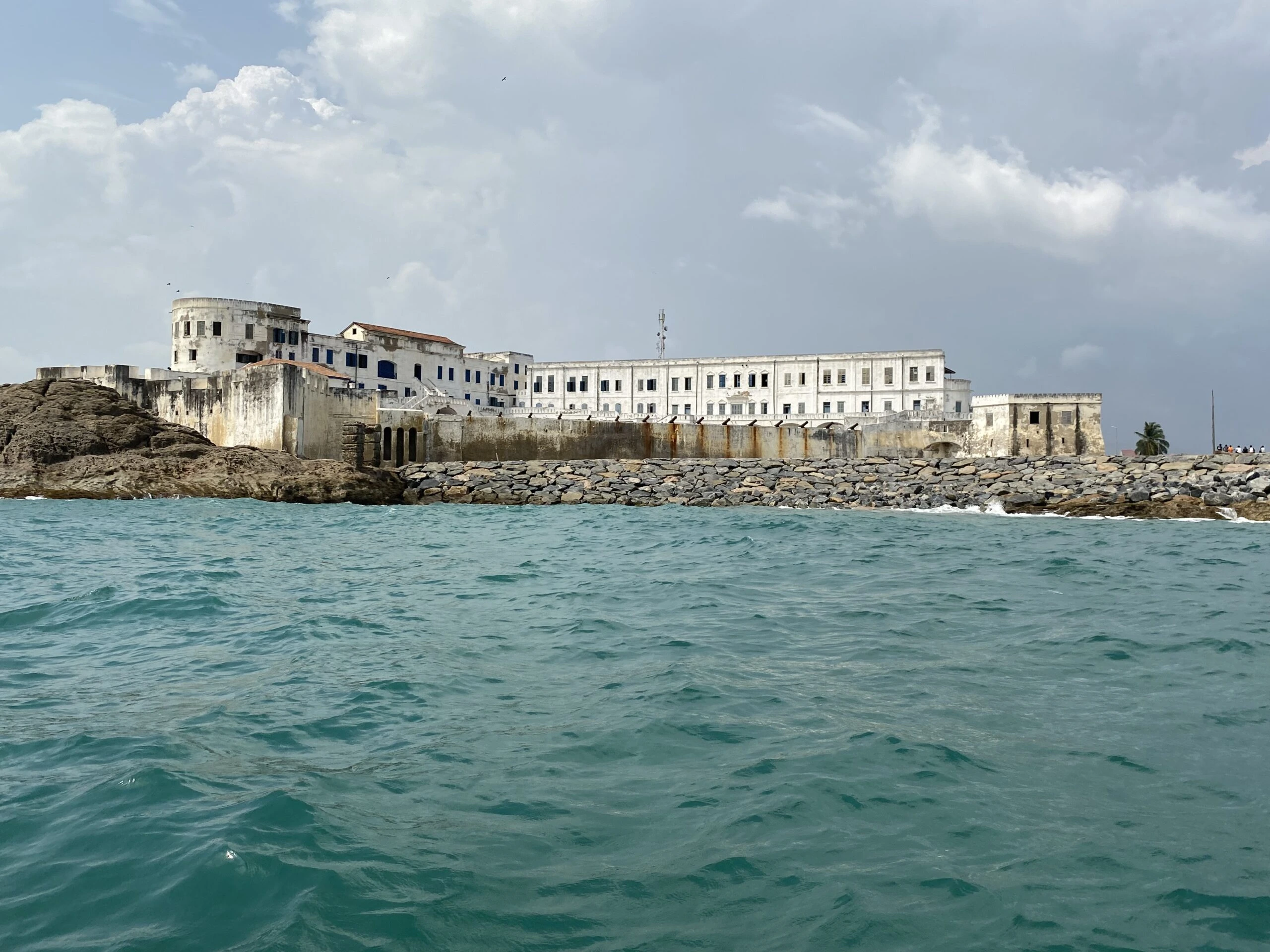
How does a single structure encapsulate both the darkest atrocities and the most resilient triumphs of human history? Cape Coast Castle, standing sentinel on Ghana’s central coastline, compels us to confront this paradox. This UNESCO World Heritage Site serves not merely as an architectural relic but as an enduring testament to centuries of commerce, cruelty, and ultimately, cultural reclamation.
Situated in the Cape Coast Metropolitan district of Ghana’s Central Region, approximately 130 kilometers west of Accra, this fortress has borne witness to more than three and a half centuries of transformative global history. What began as a modest Swedish trading post in 1653 evolved into the administrative headquarters of British colonial power in West Africa, and today stands as one of the continent’s most visited heritage sites. The castle’s significance transcends its physical dimensions; it represents the material embodiment of the transatlantic slave trade’s devastating impact on the African continent and the diaspora’s enduring connection to their ancestral homeland.
Origins and Early European Competition
The site’s European history commenced in 1555 when Portuguese traders established a modest trading lodge in the local settlement they named ‘Cabo Corso,’ meaning ‘short cape’ in Portuguese. This name, corrupted over time to ‘Cape Coast,’ now designates the capital of Ghana’s Central Region. The indigenous Fante people, however, had long known this coastal area as Oguaa, a thriving fishing community that predated European arrival by centuries.
The permanent fortification that would become Cape Coast Castle was initiated in 1653 by Henrik Caerloff, a Polish merchant employed by the Swedish Africa Company. Under the leadership of Caerloff and later Johann Philipp von Krusenstjerna, the Swedes constructed a timber fort named Carolusborg (also spelled Carlousburg or Carlusborg) in honor of King Charles X of Sweden. Caerloff’s success in establishing this foothold was largely attributable to his diplomatic relations with the local Fetu chiefs, who granted permission for the construction.
The fort’s strategic location, its proximity to Elmina Castle (St. George’s Castle) and its sheltered beach—made it an immediately coveted prize among European powers competing for commercial dominance along the Gold Coast. This seventeenth-century coastline functioned as the economic epicenter of West African trade, attracting not only the Swedes but also the Danes, Dutch, Portuguese, and Germans (the Brandenburgers). The resulting competition created a volatile environment in which fortifications changed hands with remarkable frequency.
Caerloff’s tenure proved brief. Following disputes with Swedish authorities and the death of Louis de Geer, one of the Swedish Africa Company’s principal financial backers, Caerloff switched allegiances and captured the fort for Denmark in 1657. The Danish occupation, however, was equally short-lived. By 1659, the fort’s commander, Samuel Smit, transferred his loyalty to the Dutch West India Company, bringing Carolusborg under Dutch control. The local Fetu people also briefly seized the castle following the death of their king in 1663, demonstrating that African agency played a significant role in these power transitions.
British Acquisition and Expansion
The decisive shift occurred in 1664 when Captain Robert Holmes led a small English fleet in capturing the castle after a four-day battle. The British renamed the fortification Cape Coast Castle and would retain control until 1957, making it one of the longest-held European possessions in West Africa. This acquisition formed part of a broader English campaign; Holmes simultaneously seized the forts at Takoradi, Anomabo, and other strategic points along the coast.
In 1672, the Royal African Company of England received a royal charter granting it a legal monopoly on English trade along the entire western coast of Africa, from the northern desert edge to the Cape of Good Hope. The company established its West African headquarters at Cape Coast Castle in 1678, elevating the fortress from a mere trading post to the administrative nerve center of British commercial operations in the region. Cape Coast would maintain this status until 1877, when the colonial administration relocated to Christiansborg Castle (now Osu Castle) in Accra.
The Company of Merchants, whose governors administered the entire British colony, undertook extensive reconstruction of the castle in 1699 and periodically throughout the eighteenth century. These renovations expanded the structure both landward and seaward, utilizing both locally quarried stone and imported materials. Historical records document that in 1797 alone, 50,000 bricks and 2,000 flat tiles were shipped from England for construction purposes. These expansions were necessitated by the exponential growth of the slave trade, which between 1700 and 1807 constituted approximately 90 percent of British commerce on the Gold Coast.
Colonial rivalry intensified dramatically during the Seven Years’ War when, in 1757, a French naval squadron bombarded Cape Coast Castle, inflicting severe damage. Following this assault, the English undertook a complete reconstruction after 1760, employing more durable materials and implementing an enhanced sea defense system to prevent future attacks. The Danes also acquired land approximately 1,000 meters northeast of the castle and constructed Fort Frederiksborg on an elevated position. The British eventually purchased this Danish fort, renaming it Fort Royal and maintaining it as a fortified outpost for half a century before its abandonment in the mid-eighteenth century.
The Machinery of the Slave Trade
By the eighteenth century, Cape Coast Castle had transformed into what contemporaries termed a ‘grand emporium’ of the British slave trade. Historical estimates indicate that around 1700, the Royal African Company was exporting approximately 70,000 enslaved Africans annually to the New World through Cape Coast and similar fortifications along the coast. This figure, equivalent to evacuating a modern mid-sized football stadium every year, underscores the industrial scale of the operation.
The castle’s architecture manifested a brutal physical hierarchy. Above ground, the governor’s quarters occupied an elevated position designed to capture sea breezes through expansive windows, providing British officers and their families with relative comfort. A chapel was constructed within the castle complex, its placement directly above the male slave dungeon creating a chilling juxtaposition – hymns were sung in religious worship while hundreds of captives suffered in darkness mere feet below.
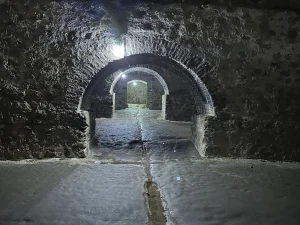
Beneath these quarters of colonial luxury, the underground dungeons were engineered to hold over one thousand people simultaneously. These were not designed as habitable rooms but as holding pens – dark, cramped spaces with minimal ventilation. Five main male dungeon sections featured uneven floors that, archaeological evidence reveals, actually rose over time due to the compaction of human waste, dirt, and organic matter left by the thousands detained there. Curators have deliberately preserved portions of this accumulated layer to convey the degrading conditions endured by captives.
The female dungeon occupied a separate section of the complex, positioned closer to the officers’ quarters. Historical accounts describe a specific balcony from which the Governor could observe the female courtyard and select women for his household. Those who resisted faced punishment: they were chained to heavy iron balls in the courtyard’s center and left exposed to the scorching sun. Iron rings, still bolted into the dungeon walls today, bear silent witness to these practices.
A ‘condemned cell’ existed for those who rebelled or attempted resistance – a space of total darkness where captives were left to starve. The thick walls, constructed from local stone and imported brick, created such effective sound insulation that even the crashing Atlantic waves outside became inaudible within. The only illumination came from narrow slits high in the ceiling, which guards used for surveillance.
This was not a clandestine operation conducted in secrecy. The Royal African Company maintained meticulous records, treating human beings as commoditized inventory. Surviving ledgers demonstrate how enslaved persons were balanced against rolls of tobacco, kegs of gunpowder, and bolts of textiles in calculated transactions. The company operated with its own coinage, flags, and private military force, functioning as a corporate enterprise with shareholders and profit margins.
Historical documents from January 1682 reveal the allocation system: nine chests of corn were distributed daily for feeding eight ‘chain slaves,’ supplemented by one-fifth of a bushel of grain. However, these provisions fluctuated according to local corn prices and the castle’s budget. In June 1683, Cape Coast Castle possessed only six chests of corn, and an inability to procure additional supplies from local markets led to starvation among prisoners. A factor wrote urgently: ‘Beg a supply within this week, else must send what slaves I have to Cabo Corso in the 5-hand canoe for they will be starved else.’
The Royal African Company distinguished between ‘shipping slaves’ (also called ‘slaves in chaines’), those destined for the transatlantic trade and ‘castle slaves’ (or ‘Arda slaves’); those who lived and labored within Cape Coast Castle itself. This internal slave labor force maintained the fort’s operations, creating a hierarchical system even among the enslaved population.
The Door of No Return
The ocean-facing side of the castle features its most symbolically powerful architectural element: the ‘Door of No Return.’ This narrow, dark archway led directly to the crashing waves of the Gulf of Guinea, where ships awaited. For centuries, this portal represented the final glimpse of African soil for countless thousands. Passing through this doorway signified an irrevocable severance from home, family, culture, and identity. The Middle Passage that followed – the brutal ocean voyage to the Americas – claimed additional lives, with many captives perishing before reaching their destinations.
Historical research indicates that between 1701 and 1800, approximately 40 percent of the over six million enslaved Africans were transported by British ships. Cape Coast Castle served as a primary departure point for a significant portion of this forced migration. Thousands of enslaved Africans, sometimes originating from hundreds of miles inland, were marched to this coastal fortress to be sold to British slave ships bound for North and South America and the Caribbean.
Post-Abolition Transformation
When Britain abolished the transatlantic slave trade in 1807, 90 percent of British commerce on the Gold Coast became illegal overnight. This precipitated vigorous debate in Britain about whether African settlements should be abandoned entirely. However, an 1821 Act of Parliament transferred management of Cape Coast Castle from the Company of Merchants to the British Crown, ensuring its continued operation.
Following abolition, trade shifted to precious metals, ivory, corn, and pepper. During the eighteenth and nineteenth centuries, the castle’s role expanded to include educational functions, becoming the center of European education in Ghana. It served successively as the headquarters for the president of the Committee of Merchants, the seat of the British governor, and eventually housed a school. These civilian functions continued even after the administrative capital moved to Accra in 1877.
The Royal African Company lost its monopoly in 1698, though it continued participating in the slave trade until 1731. It was replaced by the Company of Merchants Trading to Africa in 1752, which maintained operations until 1750. Throughout these transitions, Cape Coast Castle remained central to British interests in the region.
After Ghana achieved independence in 1957, the castle underwent an ambitious restoration project sponsored by the Ghana Museums and Monuments Board. The British had previously restored portions of the deteriorating structure in 1920, but the post-independence efforts were more comprehensive. In 1974, a historical and ethnographical museum was established within the castle walls. The 1990s brought additional international support for restoration, and today the Ghana Museums and Monuments Board administers the site.
From Trauma to Transformation: The Door of Return
Cape Coast Castle has evolved from a monument to tragedy into a site of healing and cultural reclamation. In 1998, during the first Emancipation Day celebrations in Ghana, a transformative ceremony took place. The remains of Samuel Carson from the United States and Crystal from Jamaica were brought back through the Door of No Return to be interred in Ghanaian soil. This symbolic act of ‘bringing the ancestors home’ initiated the reframing of this portal as the ‘Door of Return.’
A sign facing the ocean now welcomes the diaspora back home, transforming a site designed to break a culture into one that actively mends it. This reconceptualization gained international prominence during the ‘Year of Return’ initiative launched in September 2018 by President Nana Akufo-Addo in Washington, D.C. The campaign commemorated the 400th anniversary of the arrival of the first enslaved Africans in Virginia in 1619, specifically at Jamestown (though some sources reference Hampton).
The Year of Return 2019 attracted unprecedented attention to Cape Coast Castle. Estimates suggest that between 500,000 and 1.5 million tourists visited Ghana during this period, including celebrities, politicians, and world leaders. The Ghana Immigration Service reported a 26 percent increase in American arrivals between January and September 2019, reaching the highest levels ever recorded. Visitors from the United Kingdom increased by 24 percent, Germany by 22 percent, and significant growth was recorded from South Africa, Liberia, the Caribbean, and other key regions. Ghana issued approximately 800,000 visas during 2019, and the tourism sector recorded an 18 percent growth in international arrivals.
High-profile visitors during this period included comedian Steve Harvey, actors Boris Kodjoe, Danny Glover, and Michael Jai White, and musicians T.I. and Ludacris. The initiative built upon earlier heritage tourism efforts, including the Joseph Project launched in 2007 during Ghana’s 50th independence anniversary and President Barack Obama’s significant 2009 visit to Cape Coast Castle. Obama’s remarks during that visit emphasized the site’s profound importance to African American identity and history. Vice President Kamala Harris subsequently visited on March 28, 2023.
The Year of Return coincided with Panafest, the biennial Pan-African Historical Theatre Festival held in Cape Coast. Events included heritage site tours, healing ceremonies, theatrical and musical performances, lectures, investment forums, and relocation conferences. The campaign emphasized not merely tourism but reconnection, investment, and permanent relocation. Ghana made 126 African Americans and Caribbeans citizens as part of the celebrations, facilitated by the country’s dual citizenship provisions enacted in the Citizenship Act of 2000 and the ‘Right of Abode’ status established under the Immigration Act of the same year.
Today, visitors to Cape Coast Castle encounter wreaths of flowers left at the Door of No Return. People from Brazil, the Caribbean, and the United States stand in contemplative silence, attempting to trace lineages deliberately severed centuries ago. The castle functions as a site of pilgrimage comparable to Jerusalem or Mecca for many in the diaspora. The atmosphere balances mourning with profound connection – visitors confront the darkness of the dungeons while simultaneously experiencing the symbolic healing represented by the Door of Return.
Contemporary Significance and Ongoing Debates
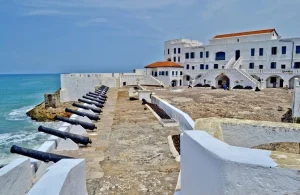
Cape Coast Castle’s designation as a UNESCO World Heritage Site acknowledges its universal historical value. The West African Historical Museum, located within the castle, houses a growing collection including ceremonial drums, antique muskets, shackles from the slave trade era, and ancient pottery. Guided tours acquaint visitors with features including Dalzel Tower, the dungeons, and the cannons and mortars used in the fortress’s defense.
Contemporary Cape Coast remains a vibrant fishing community. The colorful fishing boats and canoes that line the shore today represent a continuity of the Fante culture that existed long before European arrival. Life continues in Oguaa – the nets are mended, the market thrives, and the community endures. This resilience underscores an essential aspect of the castle’s significance: it simultaneously preserves evidence of humanity’s capacity for cruelty and demonstrates the indomitable strength of the human spirit.
The Year of Return initiative has generated substantive economic impact and sparked important discussions. Local businesses reported dramatic increases in revenue, with some establishments experiencing tripled sales. However, by 2024, some Ghanaian residents reported concerns that the influx of returnee settlers had created an economy increasingly centered on diaspora interests, potentially pricing out local populations. Additionally, scholars have critiqued the campaign’s exclusive focus on the transatlantic slave trade, noting that it obscures other significant dimensions of Ghana’s slavery history, including the trans-Saharan slave trade and internal African slavery systems.
Conclusion
Cape Coast Castle stands as an irreplaceable historical archive written in stone and mortar. Its walls contain the memories of transactions conducted, lives shattered, families separated, and futures stolen. Yet paradoxically, this monument to one of history’s greatest atrocities has become a beacon of reconciliation and cultural restoration.
The transformation from the Door of No Return to the Door of Return represents more than symbolic rebranding – it constitutes an act of historical reclamation. Where European powers once sought to erase African identity and agency, descendants now return to affirm their connection to the continent and honor the ancestors who passed through these corridors. The castle’s evolution from Swedish trading post to British administrative headquarters to diaspora pilgrimage site mirrors the broader African experience of colonization, resistance, independence, and ongoing self-determination.
As a pedagogical institution, Cape Coast Castle teaches uncomfortable truths about global commerce, imperial ambition, and human commodification. The meticulous records kept by the Royal African Company, the architectural manifestation of racial hierarchy, and the physical evidence preserved in the dungeons all demand acknowledgment of historical realities. Simultaneously, the castle demonstrates that while history is indeed written in stone, the interpretation and utilization of that history remain fluid and subject to reclamation by subsequent generations.
The castle compels visitors to confront profound questions about memory, trauma, resilience, and healing. It refuses to allow the past to remain comfortably distant, instead insisting on its continued relevance to contemporary discussions of identity, belonging, and justice. For the global African diaspora, it provides tangible connection to ancestral origins. For Ghanaians, it represents both a painful heritage and a source of national and cultural identity. For humanity broadly, it serves as a cautionary monument to the consequences of dehumanization and the imperative of remembrance.
Cape Coast Castle thus occupies a unique position in the global landscape of historical sites. It is simultaneously a place of profound sorrow and remarkable hope, a witness to human cruelty and human endurance, a symbol of rupture and reunion. As contemporary movements continue seeking to address the enduring legacies of slavery and colonialism, this fortress on Ghana’s central coast remains an essential destination for those endeavoring to understand the past, confront the present, and build a more equitable future. In the final analysis, Cape Coast Castle demonstrates that while we cannot alter history, we retain the power to determine its meaning and legacy for generations yet to come.