
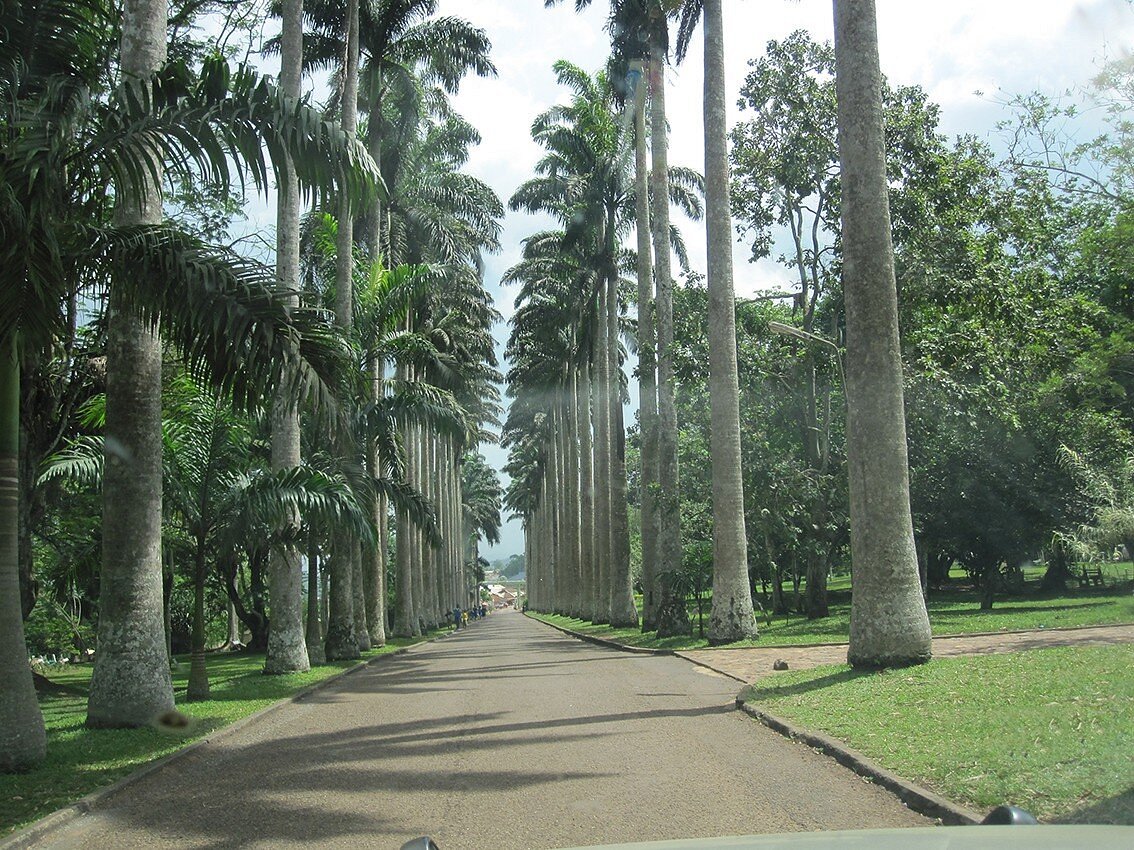
Nestled in the verdant hills of the Eastern Region of Ghana, approximately 30 kilometers north of Accra, the Aburi Botanical Gardens stands as one of West Africa’s most significant horticultural institutions. Established in the late 19th century during British colonial administration, this 64.8-hectare expanse of meticulously curated flora represents far more than a picturesque retreat, it embodies a complex legacy of scientific ambition, colonial enterprise, and the enduring beauty of Ghana’s botanical heritage.
Colonial Origins
The genesis of Aburi Botanical Gardens can be traced to 1890, when the British colonial administration identified the need for a systematic approach to agricultural research and plant acclimatization in the Gold Coast. The location was selected with deliberate calculation: situated at an elevation of approximately 370 to 460 meters above sea level in the Akuapem Hills, Aburi offered a temperate microclimate that provided respite from the sweltering heat and humidity of coastal Accra. This elevation advantage created conditions conducive not only to European comfort but, more importantly, to the cultivation of a diverse range of plant species.
The gardens were formally established under the supervision of the British colonial government, with the primary objectives of conducting botanical research, experimenting with the cultivation of economically valuable cash crops, and preserving indigenous Ghanaian flora. This tripartite mission reflected the colonial administration’s pragmatic approach to resource management which is the combination of scientific inquiry with economic exploitation while maintaining a veneer of environmental stewardship.
The initial development of the gardens involved the systematic clearing and terracing of land, the construction of infrastructure including pathways and observation areas, and the importation of exotic species from various corners of the British Empire and beyond. This period saw the introduction of species from Asia, the Americas, and other African regions, creating what would eventually become a remarkable repository of global botanical diversity.
Botanical Significance
Throughout the late 19th and early 20th centuries, Aburi Botanical Gardens functioned as a critical center for agricultural experimentation and horticultural research in British West Africa. Colonial botanists utilized the facility to test the viability of various commercial crops, including coffee, cocoa, rubber, and cinchona (the source of quinine). These experiments had profound implications for Ghana’s agricultural trajectory, particularly in establishing cocoa as a cornerstone of the nation’s economy.
The gardens’ scientific methodology was characterized by systematic organization and documentation. Plant specimens were arranged according to taxonomic classification, geographical origin, and ecological function, transforming the landscape into what scholars have aptly described as a “living encyclopedia.” This deliberate spatial organization facilitated comparative study and allowed researchers to observe the adaptation of exotic species to West African conditions while simultaneously documenting the characteristics and uses of indigenous plants.
Among the most significant aspects of the gardens’ research program was the study of medicinal plants. Species such as moringa (Moringa oleifera), neem (Azadirachta indica), and numerous indigenous herbs were cultivated and examined for their therapeutic properties. While the British colonial scientists approached these plants from a perspective of pharmaceutical extraction and potential commercial exploitation, local Ghanaian communities simultaneously maintained and developed their traditional knowledge of these same species, creating a complex intersection of indigenous wisdom and colonial science.
The Living Collection
Today’s visitor to Aburi Botanical Gardens encounters a landscape that has been shaped by more than 130 years of continuous cultivation and natural growth. The gardens’ most impressive features are undoubtedly the towering specimens that have stood for over a century, silent witnesses to Ghana’s transformation from colonial territory to independent nation.
The mahogany trees (Khaya and Swietenia species) represent perhaps the most architecturally imposing elements of the gardens’ collection. Some specimens reach heights exceeding 30 meters, their massive trunks and spreading canopies dwarfing nearby structures and creating cathedral-like spaces beneath their branches. These magnificent trees serve as both aesthetic anchors and ecological keystones, providing habitat for numerous bird species and other fauna.
The flamboyant trees (Delonix regia), with their explosive displays of scarlet-orange blossoms, create seasonal spectacles that have made them favorites among photographers and nature enthusiasts. Native to Madagascar but thriving in Aburi’s climate, these trees exemplify the successful acclimatization that was central to the gardens’ original mission.
Frangipani trees (Plumeria species) contribute their distinctive contribution to the sensory experience of the gardens. Their intensely fragrant flowers typically white, yellow, or pink release a perfume that permeates the air along the gardens’ winding pathways, creating an olfactory experience as memorable as the visual splendor.
The gardens also support a thriving population of wildlife, most notably including troops of monkeys that inhabit the upper canopy. The vocalizations of these primates create a dynamic soundscape that reminds visitors of the gardens’ function as an ecosystem, not merely a curated display.
Educational Function and Contemporary Relevance
Following Ghana’s independence in 1957, Aburi Botanical Gardens transitioned from a colonial research station to a national institution serving multiple constituencies. Today, the gardens function simultaneously as a tourist destination, an educational facility, and a continuing research center.
School groups regularly visit the gardens as part of science and environmental education curricula, utilizing the living collection to study plant biology, ecology, and conservation. The spatial organization of specimens with plants grouped by taxonomic relationship, geographical origin, and ecological niche provides an exceptional outdoor classroom for students at all levels.
Researchers continue to utilize the gardens for studies in plant physiology, ecology, and ethnobotany. The medicinal plant collection remains particularly valuable for investigations into traditional Ghanaian pharmacology and the potential development of plant-based therapeutic compounds.
For the general public, both domestic and international, Aburi Botanical Gardens offers an accessible encounter with natural beauty and historical significance. The network of pathways guides visitors through diverse microhabitats, while strategically placed benches provide opportunities for contemplation beneath the shade of century-old trees. The gardens have indeed become a favored location for photography, though this contemporary use represents merely the latest chapter in the site’s evolving relationship with Ghanaian society.
Conclusion
Aburi Botanical Gardens stands as a unique monument where natural beauty, scientific inquiry, and historical complexity intertwine. The trees that tower overhead predate Ghana’s independence; their roots anchor them to soil that has witnessed the ambitions of colonial administrators, the dedication of multiple generations of gardeners and researchers, and the evolution of a nation.
Walking the shaded paths of Aburi today, one traverses not merely a beautifully landscaped space but a living archive of botanical history, and a reminder of the complex legacies that shape our present.