
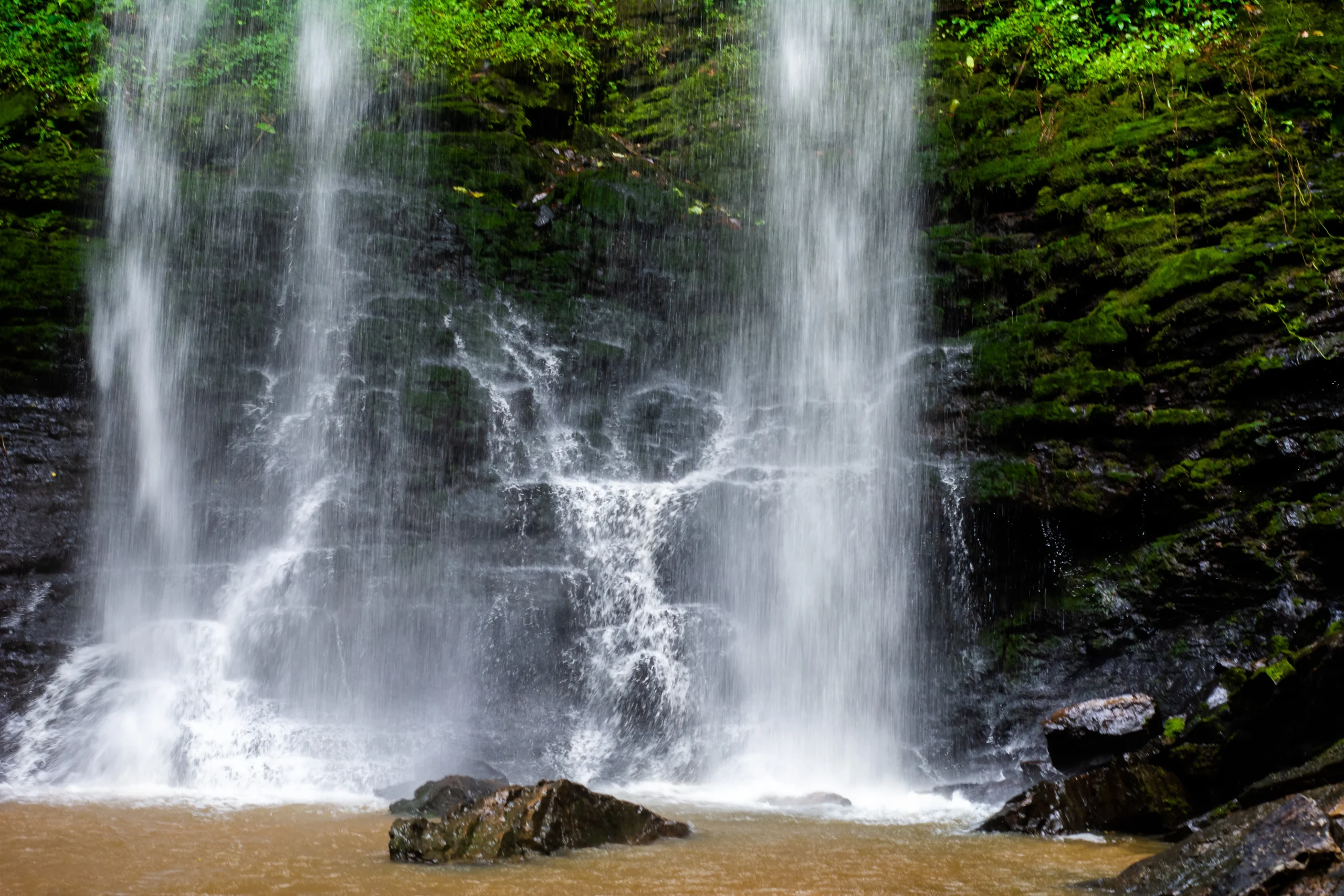
Ghana’s landscape is marked by numerous natural features that have shaped both the physical terrain and the cultural identity of its people. Among these, Asenema Waterfalls stands as a testament to the intricate relationship between natural heritage and human history. Located within dense forest terrain, this waterfall represents more than a geological formation; it embodies centuries of cultural practice, spiritual belief, and historical significance. While many natural sites have been documented extensively since colonial times, Asenema remained known primarily to local communities until relatively recent decades, preserved through oral tradition and sustained use rather than formal recognition. This article examines the historical development, cultural importance, and enduring significance of Asenema Waterfalls as both a natural landmark and a living component of Ghanaian heritage.
Geological and Historical Background
The formation of Asenema Waterfalls predates human settlement in the region by millennia. The cascade was created through the gradual erosion of ancient rock formations, as the feeding stream carved its path through layers of geological strata over countless centuries. This natural process resulted in the dramatic waterfall that exists today, with water plunging into a freshwater pool that has remained remarkably pristine despite the passage of time.
Unlike many historical sites that can be dated to specific periods of construction or establishment, Asenema has no founding date in the conventional sense. The waterfall has existed as a natural feature for geological ages, while its integration into human culture occurred gradually as communities settled in the surrounding areas. Archaeological and anthropological evidence suggests that the forests of Ghana have been inhabited for thousands of years, and it is reasonable to conclude that Asenema has been known to local populations throughout this extended period.
The waterfall’s location within dense forest terrain meant that it remained inaccessible to casual observation. Its discovery by each generation was not a matter of exploration but of inheritance, as knowledge of its location and significance passed from elders to youth through oral tradition. This mode of preservation ensured that Asenema remained embedded in local consciousness even as the broader landscape underwent significant changes.
Cultural and Spiritual Significance
The cultural importance of Asenema Waterfalls cannot be separated from the spiritual beliefs of the surrounding communities. For the villages in proximity to the falls, this site has long been regarded as sacred space, inhabited by spirits believed to protect both the forest ecosystem and the water source itself. These beliefs are not mere folklore but constitute an integral part of the religious and philosophical framework through which local communities understand their relationship with the natural world.
The etymology of the name “Asenema” reflects this spiritual dimension. While interpretations vary between different communities and dialects, the name is generally understood to translate as “the place of spirits” or “water of blessing” in the local language. This nomenclature is significant because it indicates that the site’s sacred status was considered its defining characteristic, worthy of being encoded in its very name.
Ritual practices at Asenema have been documented through oral histories and continue, in modified forms, to the present day. Historically, ceremonies were conducted at the waterfall to seek blessings for fertility, both human and agricultural. Harvest rituals invoked the spirits of the falls to ensure successful crops, while healing ceremonies sought protection from illness and misfortune. These practices positioned Asenema as a mediator between the human community and the spiritual forces believed to govern health, prosperity, and wellbeing.
Even today, some members of local communities continue to use the pool at the base of the waterfall for ritual cleansing and personal reflection. This continuity of practice across generations demonstrates the enduring relevance of Asenema within contemporary spiritual life, even as Ghana has undergone significant social and religious transformation.
Historical Role in Trade and Travel
Beyond its spiritual significance, Asenema Waterfalls occupied an important practical position in the pre-colonial and colonial-era infrastructure of the region. Before the development of modern road networks, movement through Ghana’s forested regions occurred along established footpaths that connected markets, villages, and more distant urban centers. Asenema was situated along one such route, making it a natural stopping point for traders and travelers.
The waterfall served multiple functions for these wayfarers. Most fundamentally, it provided access to clean, freshwater in an environment where reliable water sources were essential for survival during long journeys. Travelers would stop to drink, bathe, and rest in the shade of the surrounding forest. The pool at the base of the falls offered an opportunity to cleanse away the dust and fatigue of travel, preparing individuals physically and symbolically for the next leg of their journey.
Beyond these practical considerations, Asenema functioned as an informal meeting point where information and goods were exchanged. In an era when news traveled only through human contact, such gathering places played a crucial role in the dissemination of information. Traders heading in different directions would encounter one another at sites like Asenema, sharing news from distant markets, reporting on conditions along various routes, and engaging in small-scale commerce. Elders recount that stories were told at the waterfall, narratives of the land and its people that contributed to a shared understanding of the broader region.
This historical function highlights an often-overlooked aspect of natural landmarks: their role as nodes in human networks of communication and exchange. Asenema was not merely a passive feature of the landscape but an active participant in the social and economic life of the region.
Modern Recognition and Contemporary Significance
The “discovery” of Asenema by outsiders occurred gradually during the twentieth century, as explorers, travelers, and eventually tourists from outside the immediate region began to learn of its existence. This external recognition represented a shift in the waterfall’s status, transforming it from a locally-known landmark to a destination that attracted visitors from more distant locations.
It is important to note the irony inherent in the language of “discovery” when applied to sites like Asenema. Local communities had possessed intimate knowledge of the waterfall for centuries; what changed was not the waterfall’s existence but rather its visibility to populations previously unaware of it. This pattern of belated external recognition is common in the history of natural landmarks throughout Africa, where colonial and post-colonial documentation often lagged far behind indigenous knowledge.
Today, Asenema exists at the intersection of multiple identities. It remains a sacred site for those who maintain traditional spiritual practices, a natural heritage site valued for its ecological importance, and a tourist destination that attracts visitors seeking both adventure and connection with Ghana’s natural environment. The waterfall is home to diverse wildlife, including numerous bird species, butterflies, and small primates such as monkeys, making it an area of interest for naturalists and conservationists.
The pool at the base of the falls continues to be characterized by exceptional water quality, having remained largely free from industrial contamination due to its protected forest location. This environmental integrity is itself a form of historical continuity, preserving the waterfall in a condition similar to that experienced by centuries of previous visitors.
Contemporary visitors to Asenema often remark on the challenging terrain surrounding the falls, particularly the slippery rocks that must be navigated to reach optimal viewing positions. While this presents certain hazards, it also ensures that access to the waterfall requires genuine effort, maintaining a degree of the adventure that characterized historical journeys to the site.
Conclusion
Asenema Waterfalls represents a convergence of natural history, cultural heritage, and spiritual practice that spans centuries. Its significance extends far beyond its visual beauty or recreational appeal, encompassing roles as a sacred site, a historical waypoint for trade and travel, and a symbol of the enduring relationship between Ghana’s people and their natural environment.
The waterfall’s history cannot be captured in a single founding date or documented discovery, for its story is one of continuous presence and accumulated meaning. From the geological processes that shaped its physical form, through centuries of spiritual practice and practical use, to its contemporary status as both a cultural landmark and natural heritage site, Asenema has remained a constant in a changing landscape. Historical analysis of its role in trade networks and social interaction must acknowledge the oral traditions through which much of this history has been preserved.
As Ghana continues to develop and modernize, sites like Asenema Waterfalls serve as vital links to the past, reminders of the deep historical roots that underlie contemporary society. The challenge facing current and future generations is to preserve these landmarks not merely as static monuments but as living sites that continue to fulfill cultural, spiritual, and ecological functions. Asenema is not simply a relic of history to be observed from a distance; it remains, as it has been for centuries, a place of blessing, a gathering point, and a source of renewal for those who approach it with understanding and respect.